

Article: Persian Rugs and Oriental Rugs: Understanding the Difference
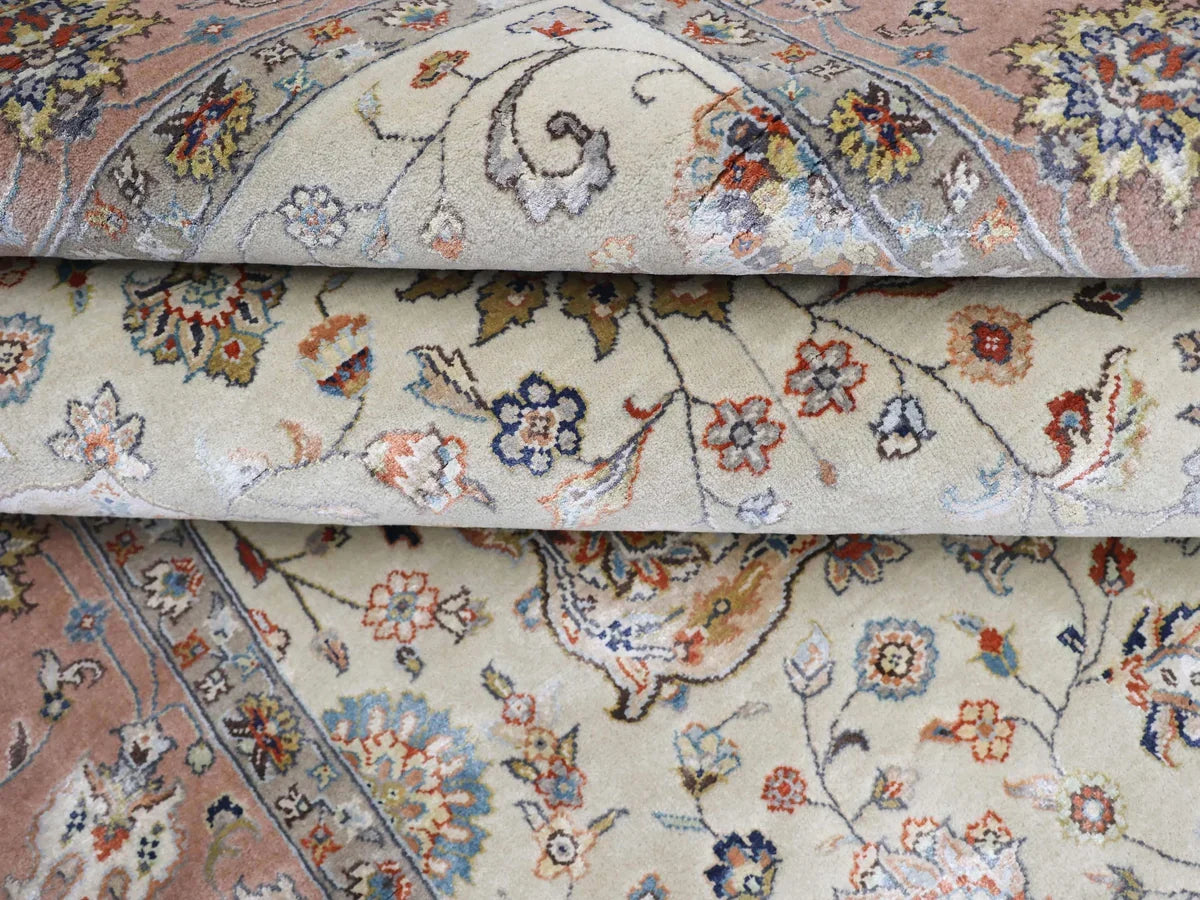
Persian Rugs and Oriental Rugs: Understanding the Difference
Shopping for a traditional rug can quickly become confusing. You may see the terms “Persian rug” and “Oriental rug” used interchangeably, even though they do not mean exactly the same thing. Both can feature intricate patterns, rich colors, and skilled craftsmanship, but their origins and the way sellers use these labels differ.
Understanding the distinction helps you compare rugs more confidently, interpret product descriptions, and choose a design that suits your home. Persian Rugs are a specific category within the broader world of Oriental rugs. The key difference comes down to geography, cultural tradition, and the diversity of weaving styles found across Asia.
Whether you are exploring traditional designs for the first time or looking for a particular regional style, knowing these terms will help you make a more informed choice.
What Is a Persian Rug?
A Persian rug is a rug made in Iran, a country historically known as Persia. The name refers primarily to geographic origin, not to one particular pattern, color palette, or weaving technique.
Iran has a long-established carpet-making tradition, with distinct styles associated with cities, villages, and weaving communities. These traditions give Persian rugs considerable variety in appearance and construction.
Regional Persian rug styles
Several well-known names identify Iranian weaving centers or regional traditions:
-
Tabriz: Often features detailed floral designs, medallions, and carefully organized compositions.
-
Kashan: Commonly associated with balanced layouts, central medallions, and elaborate floral ornament.
-
Isfahan: Often features intricate, curving motifs and finely detailed compositions.
-
Heriz: Frequently recognized for bold geometric forms and angular medallions.
-
Kerman: Includes a range of designs, often featuring floral elements and elaborate borders.
These descriptions offer general guidance rather than strict rules. Each region contains variations, and individual rugs may differ in materials, structure, age, and design.
A Persian rug does not have to display a specific motif to qualify as Persian. Its origin matters more than whether it looks like the familiar red-and-blue carpet often associated with the term.
What Does “Oriental Rug” Mean?
“Oriental rug” is a broad term traditionally used in the rug trade and museum collections for handmade rugs associated with various weaving traditions across Asia and neighboring regions. It encompasses Persian rugs as well as rugs from other places, including Turkey, the Caucasus, Central Asia, India, and China.
Because the category covers many cultures and production centers, Oriental rugs do not share one universal appearance. Some feature bold geometric patterns, while others showcase floral ornament, medallions, or more restrained compositions.
The term also has limitations. In contemporary retail, sellers sometimes use “Oriental” loosely to describe rugs with traditional motifs, including machine-made products. Therefore, the label alone may not tell you where a rug was made or how its makers constructed it.
When the origin is known, a specific name such as Turkish, Chinese, or Afghan provides more useful information. The Encyclopaedia Britannica overview of Persian carpets offers further background on Iran’s distinctive carpet tradition.
Persian Rugs vs. Oriental Rugs: The Main Differences
The central distinction is specific origin versus a broader category. Persian identifies Iranian origin, while Oriental traditionally covers a wider range of rug-making traditions.
Here is how that distinction affects the way you understand a rug:
Geographic origin
A Persian rug comes from Iran. An Oriental rug may come from Iran or another region included in the traditional category.
For example, a rug made in Turkey belongs to the Turkish tradition. It may be described as an Oriental rug in the historical trade sense, but it is not Persian simply because it features a similar medallion or color scheme.
Design and patterns
Persian rugs include a wide variety of floral, geometric, and medallion-based designs. Other rug-making traditions have their own characteristic motifs and compositions.
However, patterns can travel between regions. Weavers may adapt familiar designs, and contemporary manufacturers may reproduce traditional patterns far from their original place of development.
As a result, a rug’s appearance can suggest a design influence, but it cannot always establish its country of manufacture.
Materials and construction
Both Persian rugs and other rugs within the traditional Oriental category may use wool, cotton, silk, or combinations of these materials. Their construction can also vary.
Some rugs feature hand-knotted pile, while others use different weaving techniques. Knot structure, foundation materials, pile, and finishing details can help identify how a rug was made.
No single material or knot type proves that a rug comes from Iran. Buyers should consider several details together rather than relying on one characteristic.
Does a Persian Rug Mean Better Quality?
Not necessarily. Persian origin tells you where a rug was made, but it does not automatically establish its quality, durability, age, or value.
A Persian rug may demonstrate excellent craftsmanship, but individual pieces vary. The same applies to rugs from Turkey, India, Afghanistan, China, and other weaving regions.
Instead of judging a rug by its category alone, examine the qualities that matter for your needs.
-
Materials: Consider the fiber, texture, and suitability for your room.
-
Construction: Look at the weave, foundation, pile, and finishing.
-
Condition: For vintage or antique rugs, check for wear, repairs, fading, and structural damage.
-
Design: Choose a pattern and palette that work with your interior.
-
Documentation: Ask what evidence supports the stated origin, age, and production method.
A well-made rug from one tradition may suit your home better than a Persian rug with a design or construction that does not meet your needs.
How to Identify a Rug’s Origin Before Buying
Product descriptions can sometimes blur the difference between a rug’s origin and its design. To avoid confusion, ask the seller clear questions.
Check the wording carefully
Look for whether the listing says “Persian rug,” “Persian-style rug,” or “Oriental-style rug.” These descriptions do not necessarily communicate the same thing.
A Persian rug should have an Iranian origin. A Persian-style rug may simply borrow visual elements associated with Iranian designs, regardless of where it was manufactured.
Similarly, “Oriental-style” may describe an aesthetic rather than a specific handmade tradition.
Examine the reverse and finishing
If possible, inspect the back of the rug. It can reveal details about the weave, knot arrangement, and foundation. Also examine the edges and fringe, while remembering that repairs and finishing methods can complicate identification.
These observations can help you ask better questions, but they do not replace reliable provenance or an expert assessment when precise attribution matters.
Ask for specific details
Rather than accepting a broad label, ask:
-
Which country and region produced the rug?
-
Is it hand-knotted, handwoven, or machine-made?
-
What materials make up the pile and foundation?
-
Is the rug new, vintage, or antique?
-
What information supports the seller’s description?
Clear answers help you compare products based on evidence rather than assumptions.
Choosing Between Persian and Other Oriental Rug Traditions
Once you understand the terminology, focus on the rug that suits your space and preferences.
A Persian rug may appeal to you if you appreciate Iranian regional designs, from intricate floral compositions to bold geometric patterns. If you prefer a different visual tradition, exploring Turkish, Caucasian, Afghan, Indian, or Chinese rugs can introduce you to other approaches to color, motif, and weaving.
Consider your room’s furniture, flooring, and overall style. A detailed traditional rug can bring character to a simple contemporary interior, while a geometric design may complement clean lines and natural materials.
For more insight into Iranian weaving traditions, read our guide to the details that reveal authentic Persian rug craftsmanship. You can also explore classic Persian rug patterns and their meanings to understand the motifs found in many traditional designs.
When you are ready to explore different styles, visit Hand Made Carpets and use what you have learned to compare designs, materials, and product descriptions.
Ultimately, Persian Rugs represent one distinctive tradition within the broader world of Oriental rugs. Understanding that relationship helps you recognize what a label actually tells you, ask more precise questions, and choose a rug based on its origin, craftsmanship, and suitability for your home.
Frequently Asked Questions
1. What is the main difference between Persian rugs and Oriental rugs?
A Persian rug comes from Iran. Oriental rug is a broader traditional category that includes Persian rugs and rugs from several other weaving regions.
2. Are all Persian rugs considered Oriental rugs?
In the traditional rug-trade sense, yes. Persian rugs form one part of the broader Oriental rug category.
3. Are Persian rugs always handmade?
Not necessarily. Persian identifies origin, while construction describes how the rug was made. Check the product details to confirm whether a rug is hand-knotted, handwoven, or machine-made.
4. Can you identify a Persian rug by its pattern?
Not reliably. Many patterns have spread across regions or appear in reproductions. Origin requires more evidence than visual design alone.
5. Are Persian rugs better than other Oriental rugs?
Not automatically. Quality depends on factors such as materials, construction, condition, and workmanship, rather than geographic category alone.

